

 Aquariums & Supplies

 Coral Reef Aquariums & Supplies

 Garden & Hydroponics & Landscape

 Ponds & Fountains & Waterfalls

 Drum Pond Filter

 Community

 Help Center
Table of Contents
- How to Stop Aquarium Pump Vibration: A Step-by-Step Diagnostic
- Common Aquarium Pump Rattling Causes and How to Fix Them
- How to Quiet an Aquarium Air Pump Without Sacrificing Airflow
- Aquarium Return Pump Noise Troubleshooting: Water Pumps vs Air Pumps
- Using Aquarium Pump Rubber Feet or a Vibration Pad to Isolate Noise
- Safe Soundproofing and Ventilation for Aquarium Pumps
- When to Repair or Replace a Noisy Aquarium Pump
- Frequently Asked Questions
Last Updated: October 14, 2026
How to Stop Aquarium Pump Vibration: A Step-by-Step Diagnostic
A noisy pump is the most common complaint we hear from tank owners, and the fix is usually simpler than people expect. Learning how to stop aquarium pump vibration starts with one key fact: the sound you hear is rarely the motor itself. It is the motor's buzz traveling through a hard surface and turning into a rattle.
Below, we will show you exactly how to trace the noise to its source in under ten minutes. The U.S. Environmental Protection Agency's guide to indoor environmental quality notes that steady background noise affects concentration and comfort in homes and offices, which matters when a tank sits near a desk or a bed.
Step 1: Determine Which Pump Is Making Noise
Find the noise source first, or you will fix the wrong thing. Turn off each pump one at a time and listen.
Your tank may run several pumps: an air pump, a water or return pump, and sometimes a powerhead. Each one sounds different.

- Air pump: a fast buzzing or humming
- Return pump: a low grinding or gurgling
- Powerhead: a clicking or ticking
Unplug one pump, wait a few seconds, and listen. Plug it back in and move to the next. The moment the noise stops, you have your culprit.
Step 2: Check for Loose Parts and Debris
A pump that suddenly got loud is often a pump that sucked up something. Before you buy anything new, check the basics.
- Loose impeller cover or intake screen
- Sand, gravel, or plant bits stuck in the impeller
- A cracked or hardened rubber foot
- Tubing touching the stand or wall
Turn the pump off and unplug it before you inspect it. A quick rinse of the impeller chamber clears most debris-related rattles.
Common Aquarium Pump Rattling Causes and How to Fix Them
Aquarium pump rattling causes fall into two groups: mechanical faults inside the pump and vibration transfer outside it. Knowing which group you have tells you whether to clean, adjust, or replace.
| Cause | Typical Sound | Fix |
|---|---|---|
| Debris in impeller | Grinding, uneven rattle | Unplug, open, rinse the impeller |
| Worn rubber feet | Steady buzz on hard surface | Replace feet or add a pad |
| Pump touching stand or wall | Sharp rattle | Reposition with a gap |
| Loose tubing | Flapping or tapping | Secure and shorten the line |
| Worn impeller or bearing | Constant grinding | Replace the pump |
A common mistake is replacing a pump that only needed a five-minute cleaning. In practice, debris and hardened feet cause most of the noise we see.
How to Quiet an Aquarium Air Pump Without Sacrificing Airflow
You can quiet an air pump without cutting its output, because airflow and noise come from different places. The motor makes the hum; the air line makes the rattle. Fix each separately, and verify the result before you assume the pump is the problem.
Start With a Diagnostic Flow, Not a Fix
Before you buy a pad or move the pump, run this sequence. It takes about ten minutes and tells you which of four common sources you actually have.
- Unplug the air pump only. If the noise stops, the air pump is the source. If it continues, the noise is coming from a return pump, powerhead, or the stand itself.
- Lift the pump off its surface while it runs. Hold it in your hand or suspend it by its mount. If the buzz drops sharply, you have vibration transfer, not a mechanical fault.
- Pinch or lift the air line away from the stand and wall. If the rattle changes, the tubing is the culprit, not the motor.
- Listen at the pump body versus the tank. A hum at the pump that fades by the tank is normal motor noise. A rattle that gets louder at the tank means the stand is resonating.
Most practitioners find that step 2 or step 3 solves the majority of air pump complaints. If neither changes the sound, move on to mechanical checks.
Isolate the Pump Body
Set the pump on a soft surface instead of bare wood or glass. A folded towel is the fastest test: set the pump on it and listen. If the noise drops, you have a vibration problem, not a broken pump. Then upgrade to a proper pad.
- Silicone mat: cut to size, stays flexible, and resists moisture better than foam.
- Closed-cell foam pad: good for air pumps, but keep it dry; open-cell foam soaks up splashes and loses its damping.
- Rubber feet: replace hardened originals with soft ones. Hardened rubber transmits vibration instead of absorbing it.
- Suspension: hang the pump on a wall hook using its built-in mount. Suspending the pump in free air removes the surface it would otherwise rattle against, and it stays clear of splashes.
Manage the Air Line
The tubing is the part most people forget, and it is often the loudest part.
- Keep the air line short and free of kinks. A long, loose line flaps against the stand.
- Loop the tubing so it does not touch the stand, wall, or tank rim. A single contact point can turn a quiet pump into a tapping noise.
- Add a check valve to stop backflow. Backflow can make the pump restart harder and run louder.
- Use a slightly larger tube if the pump strains. A restricted line makes the motor work harder and hum louder.
Balance Airflow Against Noise
If the pump has an airflow knob, you can often lower the setting a notch. Less air moving means less vibration, and most tanks still get plenty of oxygen. The trade-off is real: a single-outlet pump turned down may not drive a deep airstone in a tall tank. Check that bubbles still rise steadily across the airstone before you leave it turned down.
A common pattern is to add a bleed valve or a T-fitting with a short open line to dump excess air. This lets the pump run at its efficient setting while you control output to the tank. It also reduces the back pressure that makes many pumps buzz.
Verify the Fix
Before and after each change, do a repeatable listening check. Stand in the same spot, at the same distance, with the room as quiet as you can make it. Note whether the sound is a hum, a rattle, or a tap.
If the pump still rattles after isolation and tubing management, the issue is likely inside the pump. Check for a worn diaphragm, a loose housing screw, or debris in the air intake. Diaphragms harden over time and are often replaceable; if yours is not, replacement is usually the practical fix.
Aquarium Return Pump Noise Troubleshooting: Water Pumps vs Air Pumps
Aquarium return pump noise troubleshooting follows different rules than air pumps, because a water pump moves fluid, not just air. Water pumps sit in or near the water, so the noise travels through the tank and the stand.
Quiet Air Pump Output 4X75 GPH 4-Outlet Oxygen Aerator Pump for 60-240 Gallons →
Check these first:
- Water level: a low level lets the pump suck air and cavitate
- Intake blockage: debris or a sponge clog raises the strain
- Loose mount: a return pump that is not seated will vibrate
- Worn impeller: a chipped blade causes a steady grind
Air pumps are simpler. They buzz, they are light, and they transfer vibration easily into whatever they rest on. Water pumps are heavier and often quieter, but they are harder to isolate once mounted.
If your water pump is loud and the water level is fine, the mount is the next suspect. A silicone mat under the pump body often settles it.
Using Aquarium Pump Rubber Feet or a Vibration Pad to Isolate Noise
Aquarium pump rubber feet and a vibration pad do the same job: they break the path between the pump and the surface it sits on. That path is how a small buzz becomes a loud rattle.
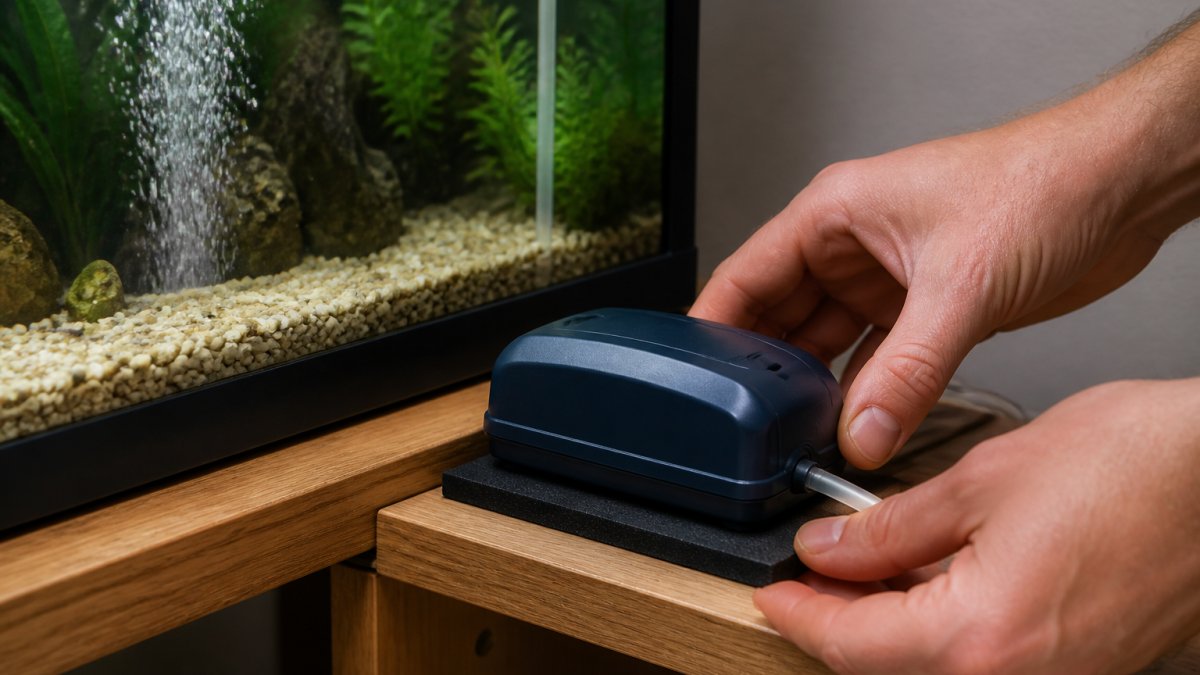
You have a few options, and they cost very little:
- Rubber feet: replace hardened originals with soft ones
- Silicone mat: cut to size and place under the pump
- Foam pad: good for air pumps, keep it dry
- Folded towel: a quick test before you buy anything
A folded towel is the fastest test. Set the pump on it and listen. If the noise drops, you have a vibration problem, not a broken pump. Then upgrade to a proper pad.
Our Quiet Air Pump line ships with shock-absorbing, anti-vibration rubber pads built in. The integrated air chamber also isolates mechanical noise at the source.
Safe Soundproofing and Ventilation for Aquarium Pumps
Soundproofing a pump is safe only if the pump still gets air. Air pumps pull in air to push into the tank, and return pumps shed heat. Seal either one in a closed box and you risk overheating.
Safe soundproofing means:
- Leave gaps for airflow on at least two sides
- Never wrap the motor in fabric or foam
- Keep the pump away from water and splashes
- Do not enclose a pump in a sealed cabinet
A lined cabinet with vents works. A sealed box does not. If you cannot keep the pump dry and ventilated, move it instead of boxing it in.
When to Repair or Replace a Noisy Aquarium Pump
Replace the pump when the noise comes from inside it, not from its surroundings. If you have isolated it, checked the water level, and cleared the debris, and it still grinds, the motor or impeller is worn.
Signs it is time to replace:
- Grinding that continues after cleaning
- A pump that runs hot to the touch
- Reduced airflow or water flow
- A rattle that started suddenly and will not stop
Most quality pumps last several years with basic care. Our air pumps carry a 1-year warranty, which covers defects but not wear from running dry or overheating.
If you are unsure, do the towel test one more time. If the noise drops on a soft surface, keep the pump and fix the mount. If it does not, the pump is the problem.
Frequently Asked Questions
How to make an aquarium pump silent?
Start by placing the pump on a soft, vibration-absorbing surface like a foam pad or rubber feet. Ensure it's not touching the tank stand or walls. Check for loose parts or debris in the impeller. For air pumps, hang them or place them on a towel. If noise persists, consider replacing worn rubber feet or upgrading to a quieter model. AquaDreamUSA's quiet air pumps feature anti-vibration rubber pads and integrated air chambers to minimize noise.
What are the common causes of aquarium pump vibration?
Common causes include worn rubber feet, debris in the impeller, loose mounting, and hard surfaces that transmit vibration. Air pumps may rattle due to a faulty diaphragm or check valve. Return pumps can vibrate if the impeller is unbalanced or the pump is not sitting level. Regular maintenance and proper isolation can prevent most vibration issues.
Can a hard surface make an aquarium pump louder?
Yes, hard surfaces like wood or glass can amplify vibration and noise. Placing the pump directly on a tank stand or shelf allows vibrations to transfer and resonate. Using a soft, sound-dampening pad or rubber feet can significantly reduce noise by absorbing vibrations before they reach the surface.
When should I replace a noisy aquarium pump?
If your pump is making unusual rattling, grinding, or humming noises after troubleshooting and maintenance, it may be worn out. Check for cracks, damaged impellers, or a failing motor. Most quality pumps last several years; if performance drops or noise persists, replacement is the best option. AquaDreamUSA air pumps come with a 1-year warranty for peace of mind.
A loud tank pulls attention for the wrong reasons, especially in a lobby or office where the display is meant to impress. AquaDreamUSA builds pumps with integrated air chambers, anti-vibration rubber pads, and durable housings that cut motor noise at the source. Our Quiet Air Pump line covers tanks from 10 to 240 gallons, ships fast, and comes with a 1-year warranty. Get started with AquaDreamUSA and enjoy a display that looks as good as it sounds.